
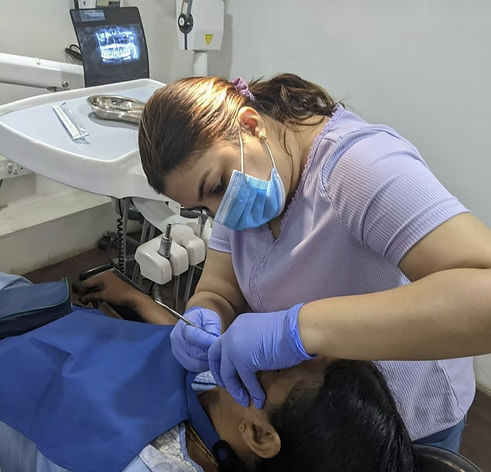
When does a tooth need a root canal?
When decay or a crack reaches the soft pulp inside the tooth, it becomes inflamed or infected. Signs include lingering pain with hot or cold, pain on biting, swelling or a darkened tooth. Removing the infected pulp and sealing the canals lets you keep your natural tooth instead of losing it.
What we treat
-
Single-sitting root canal: Suitable cases are cleaned, shaped and sealed in one visit.
-
Re-treatment: Care for an older root canal that has become painful or infected again.
-
Crowns after RCT: A crown protects the treated tooth from cracking so it lasts for years.
Why save the tooth?
Your natural tooth is almost always better than a replacement. A root canal removes the infection and the pain while keeping the tooth in place, so you chew normally and avoid the cost and time of an implant or bridge.
How a root canal works
-
Diagnosis. We examine the tooth and take an X-ray to see how far the problem goes.
-
Numbing. Local anaesthesia keeps you comfortable throughout.
-
Cleaning. The infected pulp is removed and the canals are cleaned and shaped.
-
Sealing. The canals are filled and sealed to keep bacteria out.
-
Protecting. A filling or crown restores the tooth so you can chew normally again.
Clear fees before we start
Consultation ₹449. We examine the tooth, take an X-ray and explain your options. The root canal and crown are priced on request, and you get one fixed quote after the consultation, so there are no surprises later.
Frequently asked questions
Does a root canal hurt?
The tooth is fully numbed first, so most patients say it feels like a long filling. Some tenderness for a day or two afterwards is normal.
How many visits will I need?
Most root canals finish in one or two visits. An infected or re-treated tooth may need one more.
Do I need a crown afterwards?
Usually yes for back teeth. A treated tooth becomes more brittle, and a crown protects it from cracking.
Can I eat after treatment?
Wait until the numbness wears off, then eat soft food. Avoid chewing hard food on that side until the tooth is fully restored.